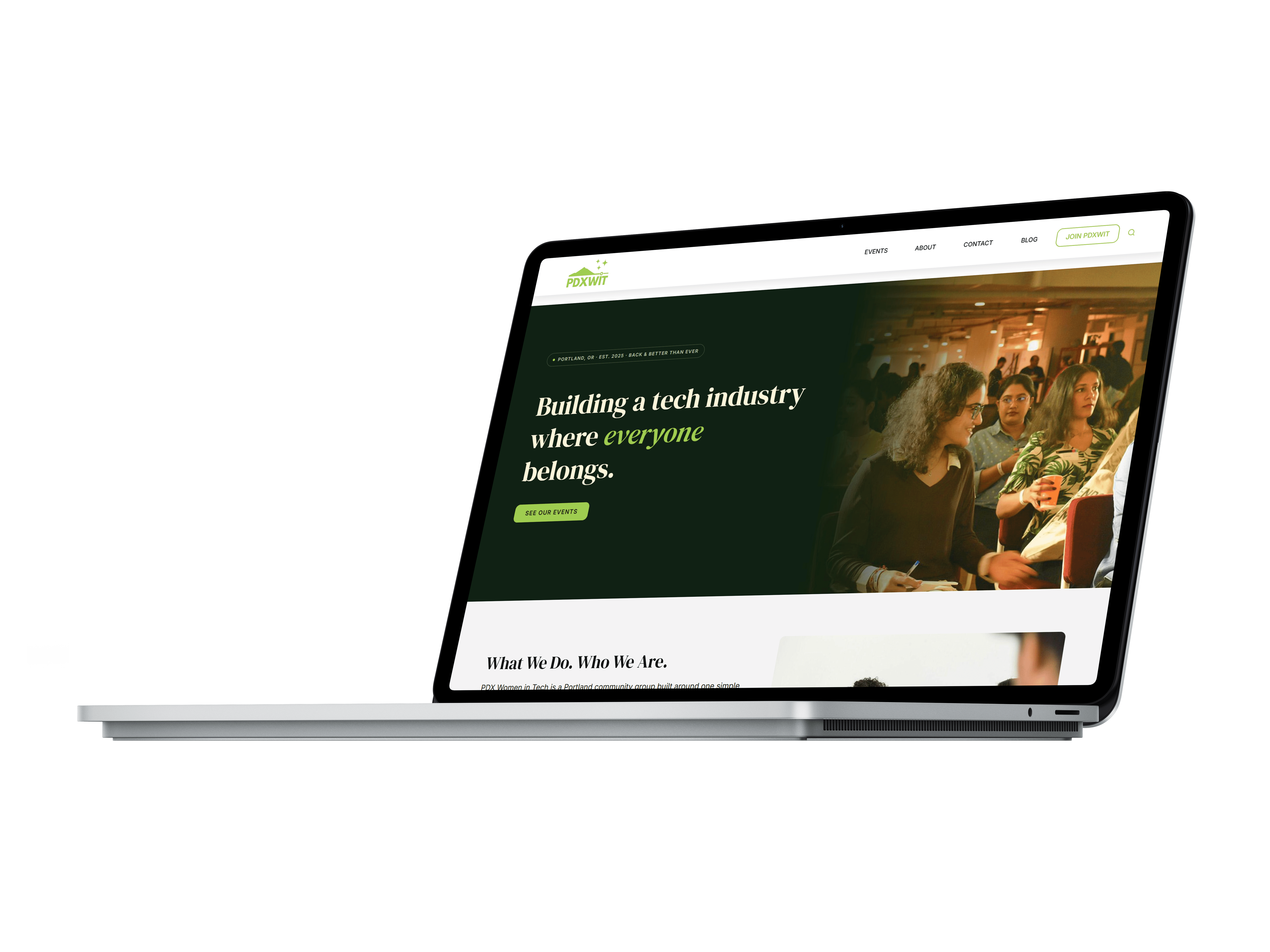
Bringing PDXWIT Back Online
✦
Designing a scalable digital home for a community-led tech organization relaunch
Portland Women in Technology (PDXWIT) had been offline for a while. When new leadership relaunched the organization in 2026, they needed more than a basic website refresh — they needed a digital home that could support a revitalized community from the jump.
The Challenge
PDXWIT operates as a volunteer-led organization without a dedicated developer on standby. Because of this, maintainability became one of the most important parts of the project.
The challenge wasn’t only designing something visually cohesive, it was creating a system volunteers could realistically manage long-term.
The site needed to:
Launch quickly
Support multiple event formats
Work for both new and returning community members
Be easy for non-technical contributors to update
Scale as the organization expanded
At the same time, the experience needed to feel welcoming and easy to navigate. Some users would be discovering PDXWIT for the first time, so reducing friction throughout the site became a priority.
My Role
I led early UX thinking for the project through wireframing, information architecture, and reusable component planning. My wireframes became the foundation for the site’s layout structure and growing component system.
Working closely with Meghan Lewis throughout implementation, we collaborated in real time to translate the wireframes into scalable Elementor components while balancing usability, scalability, and production realities. Because of the fast launch timeline, we prioritized building a strong functional foundation with reusable structures and clear user journeys over extensive prototyping or pre-launch testing.
Designing the User Journey
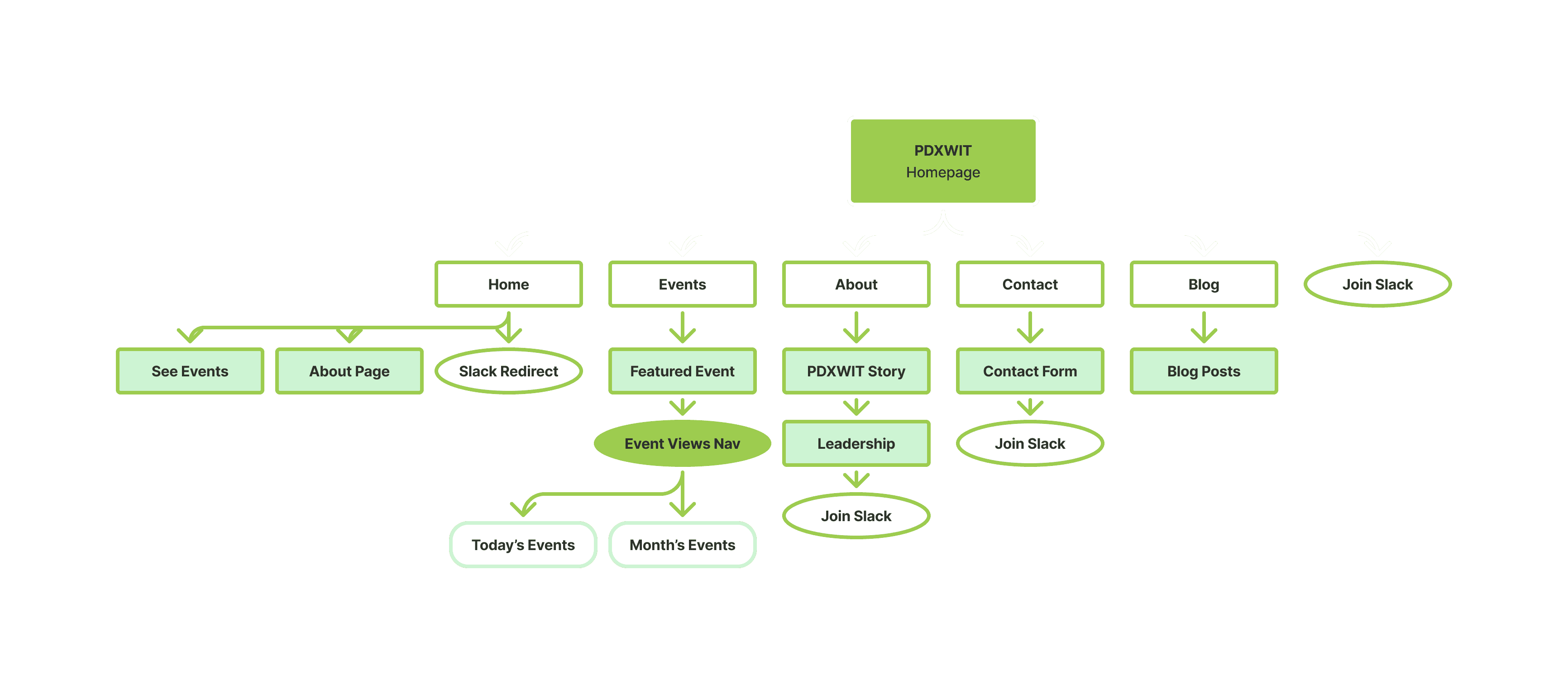
The site architecture was built around a simple user journey:
Discover the community → Find events → Learn more → Get involved
Each page plays a specific role within that flow.
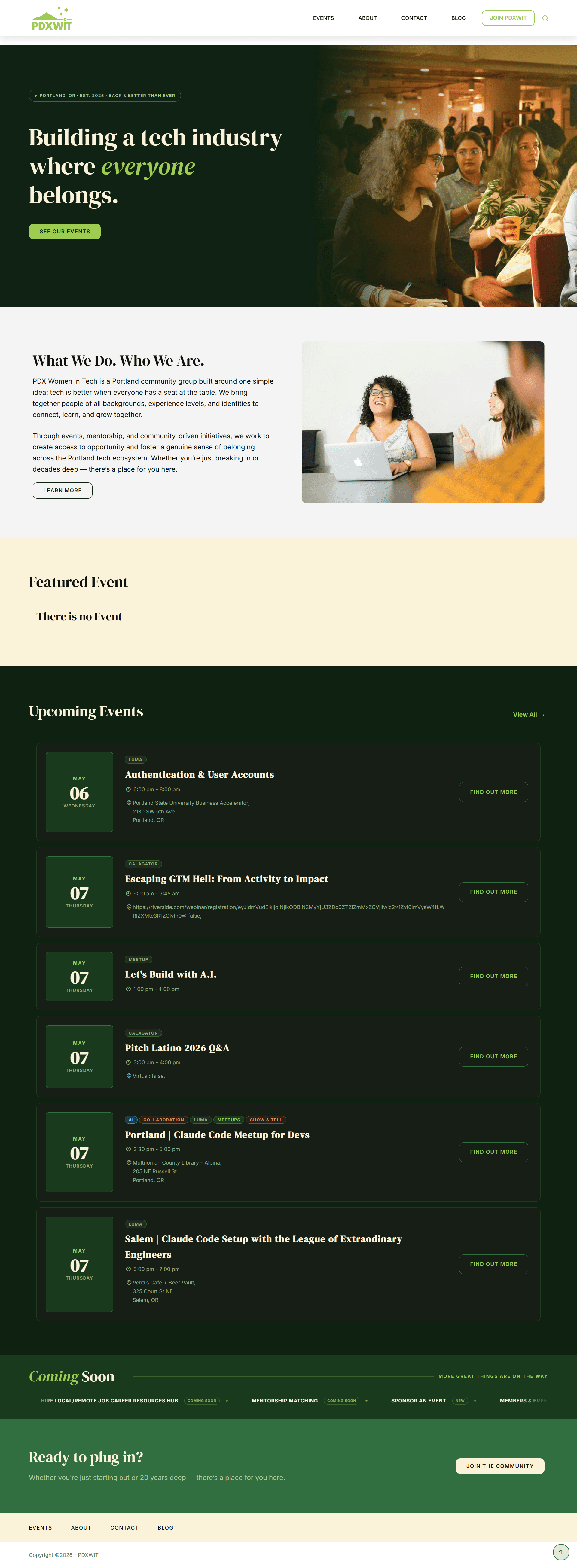
The homepage was designed to quickly communicate what PDXWIT is, what the organization offers, and how users can participate. Clear calls-to-action and event visibility became important for helping first-time visitors immediately understand the community.
The Events page became one of the most important operational parts of the platform. The system needed to support recurring meetups, workshops, and speaker events while remaining manageable for volunteers updating the site.
The Events Calendar plugin allowed for:
Individual event detail pages
Category filtering
Recurring event support
Scalable event organization
Flexible layouts for different event formats
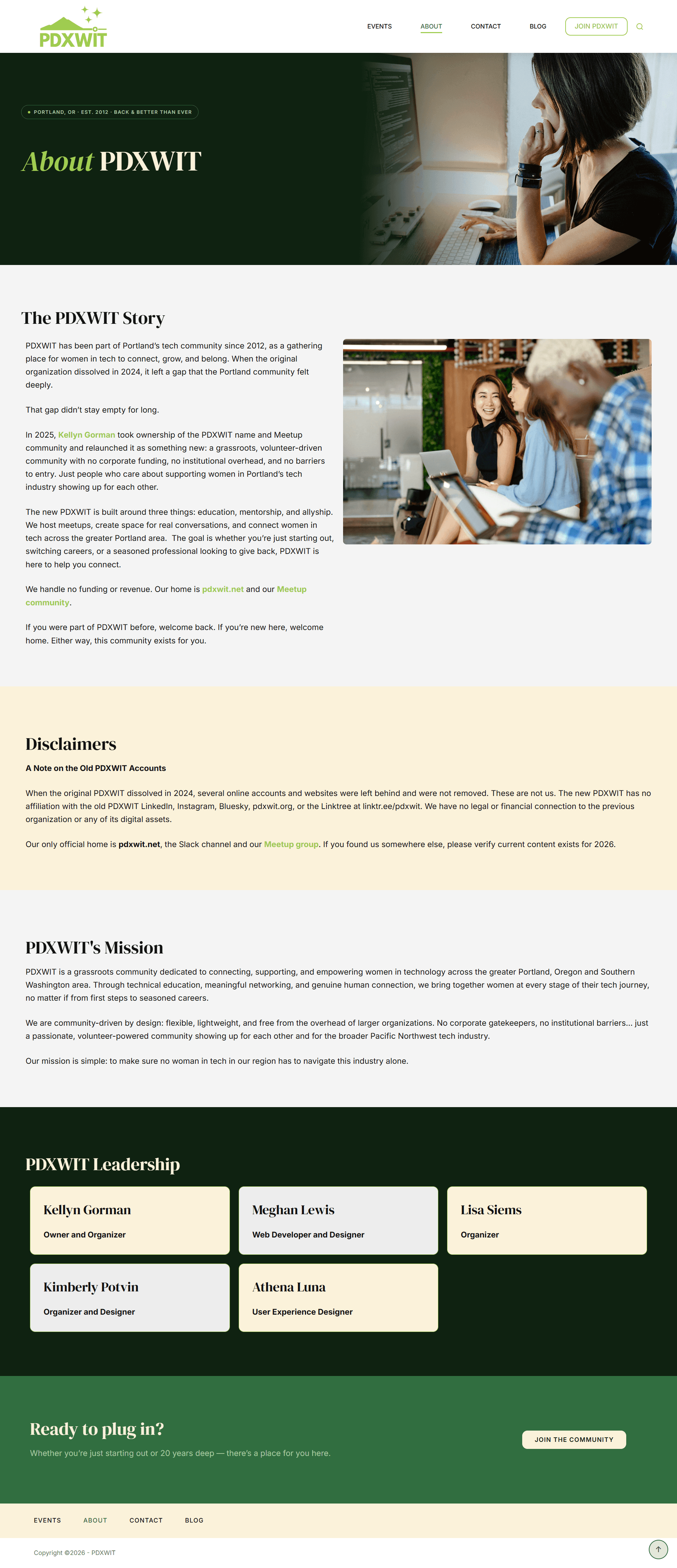
The About page focused on rebuilding trust and community identity, while the Blog and Contact pages created additional pathways for engagement.
Designing For Sustainability
One of the biggest priorities throughout the project was sustainability.
A volunteer-maintained site lives or dies by how easy it is to update. The goal wasn’t simply to launch the website successfully. Rather, it was to make sure the organization could realistically maintain and grow it without depending on technical specialists.
To support this, the site was built using:
Reusable page templates
Modular Elementor sections
Flexible content layouts
Repeatable event workflows
A growing component system
This allowed non-technical contributors to publish events, update pages, and manage content without needing to touch code. Designing for operational simplicity became just as important as designing for users themselves.
Site Navigation
Time Constraints
Because the organization was relaunching on a fast timeline, we had to prioritize shipping a functional and scalable platform quickly. Due to these time constraints, we did not conduct formal user testing or interactive prototype testing before launch. Instead, we focused on establishing a strong foundational experience that could support real community activity immediately.
While this meant some decisions had to be made quickly, it also reinforced the importance of designing flexible systems that could evolve after launch. The current live site now gives us the opportunity to gather feedback from real community members and iterate based on actual usage patterns instead of assumptions alone.
Impact
PDXWIT relaunched with a fully operational digital presence capable of supporting both immediate community needs and long-term organizational growth.
The site successfully established:
A centralized event hub
A scalable content structure
Maintainable volunteer workflows
A stronger digital identity for the organization
The platform now supports multiple recurring event formats including:
Meetups
Workshops
Speaker events
Code & Coffee sessions
Most importantly, the community once again has a visible and accessible online presence.
Final Pages
Impact Highlights
Full Site Launch
Homepage, Events, About, Contact, and Blog pages launched fully branded and operational.
4+ Event Types Supported
Scalable event infrastructure designed for recurring community programming.
Volunteer-Friendly CMS
Reusable systems allow non-technical contributors to manage content independently.
Community Relaunch Support
PDXWIT returned with a digital presence built to support future growth instead of temporary visibility.
Next Steps
Although the current launch established a strong foundation, the platform was intentionally designed to continue growing alongside the community.
The next phase of the project focuses on expanding both functionality and community support systems.
Planned future additions include:
Mentorship program pages
Job board functionality
Community feedback systems
Additional volunteer resources
Expanded blog and educational content
Sponsorship opportunities and partnerships
We also plan to begin user testing with the live website to better understand how community members navigate the platform, interact with event systems, and discover resources.
Launching quickly meant prioritizing functionality first, but the long-term vision for the platform has always been iterative growth informed by real community feedback.